
Caring for a child with cerebral palsy (CP) can be both challenging and deeply rewarding. When you’re navigating medical terms, therapy choices, and long-term goals, it’s important to have clear, trustworthy information at your fingertips. This blog breaks down what every parent should know about cerebral palsy — from understanding the condition to exploring effective therapy options — with a focus on Cerebral Palsy treatment in India and how IIAHP supports families with comprehensive, child-centered care.
What Is Cerebral Palsy?
Cerebral palsy is a group of permanent neurological disorders that affect movement, muscle tone, and posture. It usually results from early brain injury or abnormal brain development before, during, or shortly after birth. While CP itself does not worsen over time, its symptoms can change as a child grows.
Children with cerebral palsy may experience:
- Muscle stiffness (spasticity)
- Poor coordination or balance
- Delays in reaching motor milestones
- Difficulty with fine motor skills (e.g., grasping objects)
- Speech challenges or swallowing difficulties
Because every child with CP is unique, treatment plans must be individualized. This is why centers like IIAHP, with expertise in developmental neurology and therapy integration, are trusted by families seeking Cerebral Palsy treatment in India.
Why Early Intervention Matters
The early years are a critical time for brain development. Early diagnosis and therapy help maximize neural plasticity — the brain’s ability to form new connections — which can significantly improve outcomes in motor control, communication, and independence.
Parents should seek evaluation as soon as motor delays or unusual muscle tone are observed. Early therapy nurtures development and empowers families with strategies they can use at home.
Core Goals of Cerebral Palsy Treatment
The ultimate goals for managing cerebral palsy include:
- Maximizing movement and independence
- Improving balance, posture, and coordination
- Enhancing communication and social interaction
- Supporting cognitive and learning development
- Improving quality of life for the child and family
A comprehensive treatment plan combines multiple therapeutic approaches tailored to each child’s specific strengths and challenges.
Effective Therapies for Cerebral Palsy at IIAHP
At IIAHP, therapy plans are based on a child’s individual assessment and developmental needs. The team integrates a range of therapies to support physical, cognitive, sensory, and communicative skills — making it one of the leading options for Cerebral Palsy treatment in India.
Here are some of the key therapies used:
Brain Training & Reflex Integration
These exercises aim to stimulate neural pathways and improve motor planning, coordination, and cognitive organization — helping children achieve smoother, more efficient movement patterns.
Balance Board and Motor Skill Programs
Balance board activities and targeted motor skill tasks help children improve posture control, coordination, and confidence in movement — critical for walking, running, and daily activities.
Speech and Language Therapy
Children with cerebral palsy may face challenges in speech articulation or language comprehension. Speech therapy supports clearer communication and can also address feeding and swallowing issues.
Auditory Integration and Listening Programs
Listening therapies help children process sound more effectively, which can support attention, language development, and classroom learning.
Sensory Integration
For children who have difficulty processing sensory input (e.g., touch, movement, sound), sensory integration therapy promotes better regulation and helps reduce distractions caused by sensory sensitivities.
Academic Enrichment and Cognitive Support
To support learning and academic readiness, IIAHP incorporates cognitive exercises aligned with school goals and individualized needs.
What Parents Should Expect from Therapy
Parents often ask, “How will therapy help my child?” While outcomes vary for each child, here’s what you can expect from an effective cerebral palsy treatment plan:
- Improved posture and movement control
- Greater independence in daily tasks
- Stronger communication skills
- Better sensory processing and attention
- Enhanced cognitive and learning abilities
Therapy is most effective when it’s consistent, goal-oriented, and integrated into your child’s daily routine.
Choosing the Right Cerebral Palsy Treatment in India
Selecting the right center and therapy plan can feel overwhelming. Here’s what parents should look for:
- Comprehensive assessments that guide therapy planning
- Multidisciplinary therapy teams experienced with CP
- Individualized programs tailored to your child’s needs
- Ongoing support and progress tracking
- A welcoming, family-centric environment
IIAHP checks all these boxes, offering integrated therapy programs that foster development, build confidence, and support families throughout their journey.
Final Thoughts
Cerebral palsy presents challenges, but with the right support, children with CP can achieve meaningful progress in movement, communication, learning, and independence. Understanding the nature of the condition, embracing early intervention, and choosing evidence-based therapies are essential steps for parents.
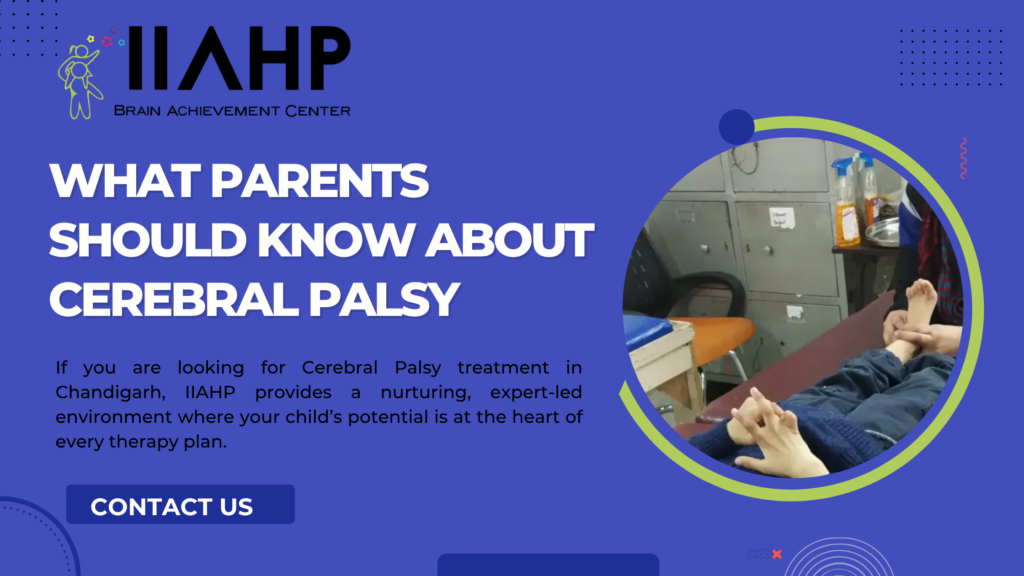
If you are looking for Cerebral Palsy treatment in Chandigarh, IIAHP provides a nurturing, expert-led environment where your child’s potential is at the heart of every therapy plan. For personalized guidance or to learn more about their therapy programs, visit: https://www.iiahp.com/therapies/