
Down syndrome treatment is often misunderstood as a limited set of therapies focused only on speech or physical exercises. But in real clinical practice, what truly improves a child’s daily life goes far beyond that. Parents don’t just want milestones—they want independence, communication, confidence, and real-world functioning.
In India, centers like IIAHP are shifting treatment toward a more holistic, brain-based approach—one that focuses on how a child lives, learns, and interacts every day.
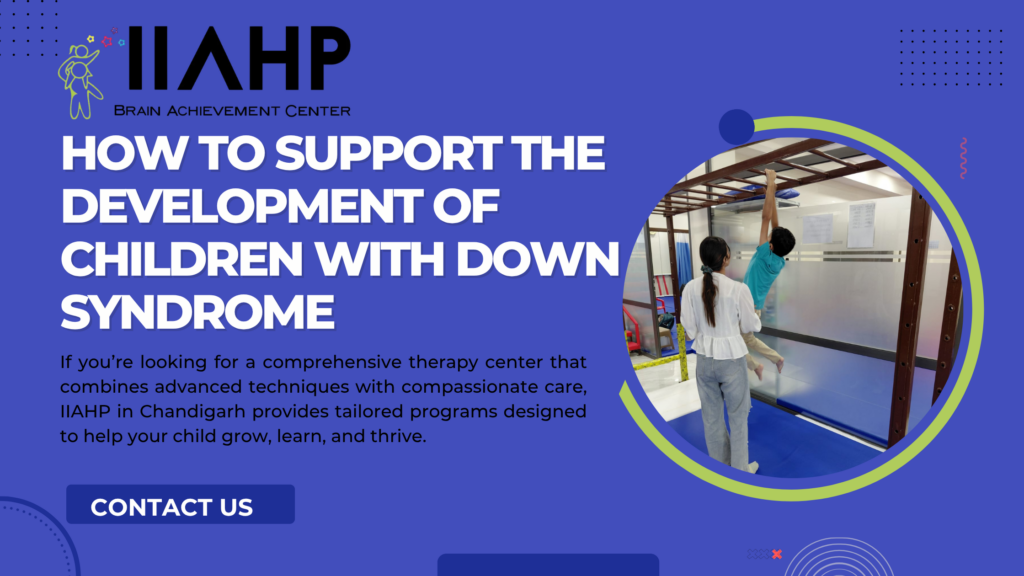
Understanding Down Syndrome Treatment in India
Down syndrome (Trisomy 21) is a genetic condition caused by an extra chromosome, affecting cognitive ability, physical growth, and developmental milestones.
There is no cure, but structured therapies can significantly improve:
- Motor skills
- Speech and communication
- Cognitive ability
- Social interaction
- Daily functioning
Early and consistent intervention is key to improving quality of life. We have a few children with Down syndrome who became almost normal in all respects after coming to IIAHP for therapies.
What Actually Improves Daily Life? (Real Treatment Outcomes)
Instead of focusing only on “therapy sessions,” let’s break down what actually changes a child’s everyday life.
1. Improved Muscle Tone & Movement
Many children with Down syndrome have low muscle tone (hypotonia), which affects:
- Walking
- Sitting posture
- Coordination
Therapies like:
- Physiotherapy
- Balance board training
- Neurodevelopmental therapy
- Reflex integration to improve agility and coordination
help children move independently and safely.
At IIAHP, structured programs focus on stretching, movement, reflex integration, balance, strength, posture, and coordination, which directly impact daily activities like walking, sitting, and playing.
👉 Real-life impact:
A child who previously struggled to sit properly can now eat, study, and play independently.
2. Better Communication (Not Just Speech)
Speech is important—but communication is broader:
- Eye contact
- Understanding instructions
- Expressing needs
IIAHP uses:
- Speech therapy
- Oro-facial therapy
- Auditory integration
These improve both verbal and non-verbal communication.
👉 Real-life impact:
Instead of frustration or tantrums, the child can express needs clearly.
3. Cognitive Development & Learning Ability
One of the biggest improvements comes from brain-based therapies.
At IIAHP, programs like:
- Brain Gym
- Academic enrichment (reading, math)
- Neuro-structural therapy
help improve:
- Attention span
- Memory
- Learning speed
These therapies stimulate brain development and neural connections.
👉 Real-life impact:
Children become more responsive, attentive, and ready for school learning.
4. Sensory Regulation & Behavior Improvement
Children with Down syndrome often face sensory processing challenges:
- Overreaction to sound or touch
- Poor focus
- Behavioral frustration
Therapies like:
- Sensory integration
- Tactile therapy
- Art therapy
help regulate the nervous system.
👉 Real-life impact:
Improved calmness, better focus, and smoother social interactions.
5. Independence in Daily Activities
The ultimate goal of Down syndrome treatment is independence.
Occupational therapy at IIAHP focuses on:
- Eating
- Dressing
- Writing
- Self-care
👉 Real-life impact:
Children gradually depend less on parents for daily routines.
6. Parent Training & Home Programs
One major differentiator at IIAHP is parent involvement.
Parents are trained to:
- Continue therapy at home
- Maintain consistency
- Track progress
This ensures therapy is not limited to clinic hours.
👉 Real-life impact:
Faster and more sustainable improvement.
The IIAHP Approach: Why It Stands Out
IIAHP in Chandigarh offers a multi-disciplinary, integrated treatment model, which includes:
- Reflex Integration Therapy
- Sensory Integration
- Speech & Oro-facial therapy
- Brain Gym & Floor Programs
- Nutrition and diet support
- Academic development programs
Key advantages:
- Personalized therapy plans
- Focus on brain development (not just symptoms)
- International therapy techniques
- All therapies under one roof
This integrated approach leads to real functional outcomes, not just temporary improvements.
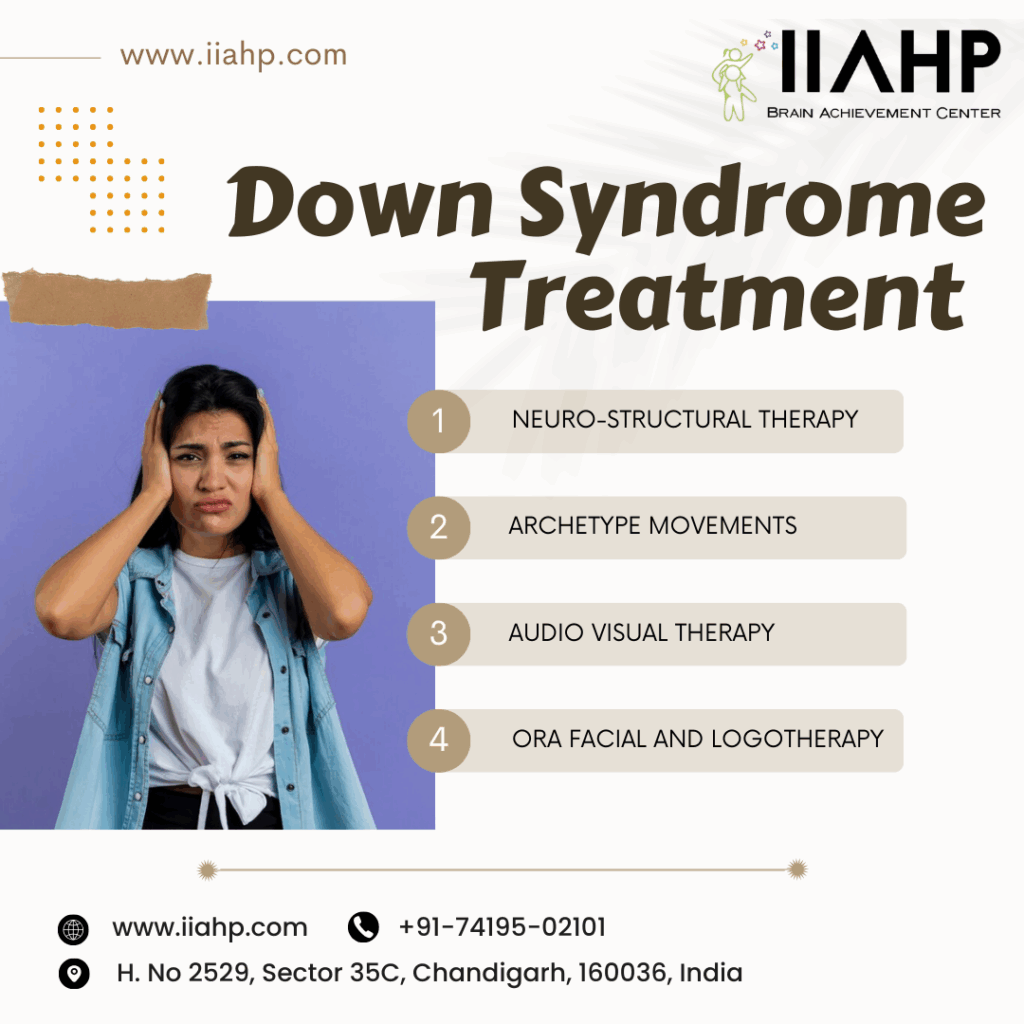
Why IIAHP Does Better
IIAHP’s content stands out because it:
- Focuses on daily life improvements
- Explains specific therapies and their purpose
- Emphasizes early intervention and neuroplasticity
- Highlights parent involvement and home programs
- Uses a holistic, multi-therapy approach
This aligns better with real parent search intent:
“How will my child improve in real life?”
Why Early Intervention Changes Everything
Research and clinical experience both show:
- Early therapy leads to faster brain development
- Neural plasticity is highest in early years
- Consistent therapy improves long-term independence
Starting treatment early can significantly improve:
- Walking
- Talking
- Learning
- Social interaction
Final Thoughts
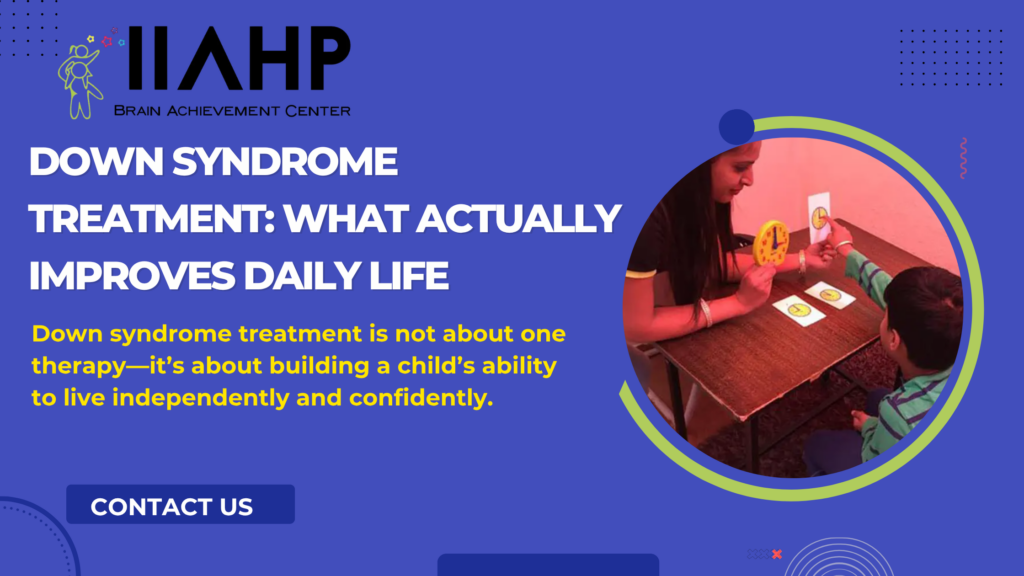
Down syndrome treatment is not about one therapy—it’s about building a child’s ability to live independently and confidently.
What truly improves daily life:
- Better movement
- Clear communication
- Stronger cognition
- Emotional regulation
- Functional independence
IIAHP is redefining down syndrome treatment in India by focusing on real outcomes, not just therapy sessions.