


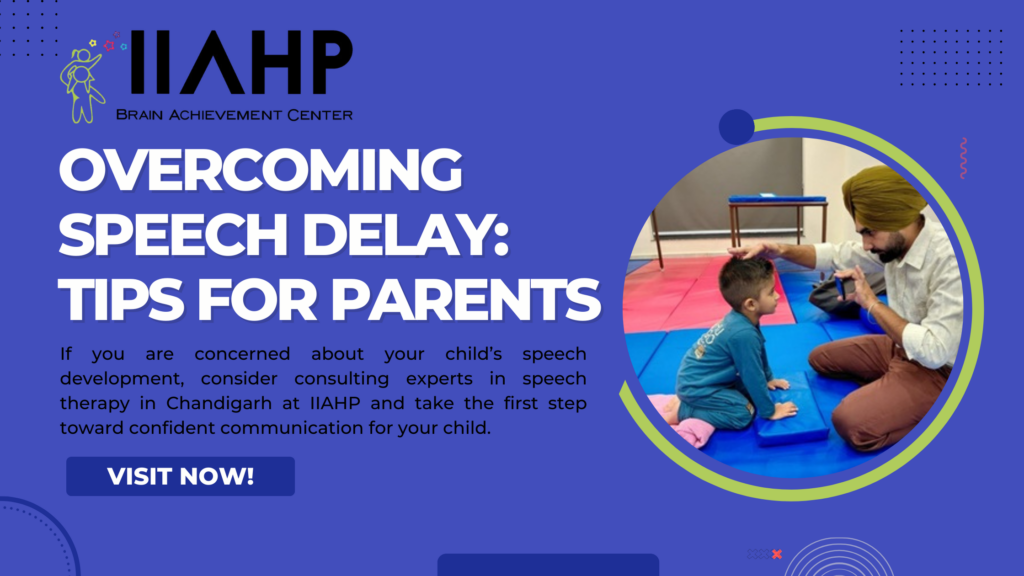
Speech is one of the most important tools a child uses to express thoughts, emotions, and needs. When a child experiences speech delay, it can be worrying for parents and caregivers. Questions like “Is this normal?”, “Will my child catch up?” or “Do we need professional help?” are very common. The good news is that with the right support, guidance, and early intervention, most children can make significant progress.
At IIAHP, parents are guided through a structured, child-centric approach that helps children overcome speech delays effectively. This blog shares practical, parent-friendly tips along with professional insights, especially for families looking for speech therapy in Chandigarh.
Understanding Speech Delay in Simple Terms
Speech delay means a child is not developing speech and language skills at the expected age milestones. This can include:
- Speaking fewer words than peers
- Difficulty forming sounds or words
- Trouble understanding simple instructions
- Relying more on gestures than words
Speech delay can occur due to hearing issues, developmental delays, neurological conditions, oral-motor difficulties, or limited language exposure. Regardless of the cause, early and consistent support plays a critical role in improvement.
Why Parents Play a Key Role in Overcoming Speech Delay
While professional speech therapy is essential, parents are a child’s first and most influential teachers. Daily interactions at home provide countless opportunities to encourage communication. When parents actively participate alongside therapy, progress becomes faster and more sustainable.At IIAHP, therapists work closely with parents, helping them understand how to support speech development at home in natural, stress-free ways.
Practical Tips for Parents to Support Speech Development
1. Talk More, Talk Naturally
Speak to your child throughout the day during routine activities—while dressing, eating, bathing, or playing. Describe what you are doing in simple language:
- “We are washing hands.”
- “Here is your red ball.”
This constant exposure helps children associate words with actions and objects.
2. Follow Your Child’s Lead
Instead of directing conversations, observe what your child is interested in and talk about that. If your child points to a toy, name it and expand slightly:
- Child: “Car”
- Parent: “Yes, a blue car. The car is fast.”
This method encourages participation without pressure.
3. Reduce Screen Time, Increase Interaction
Excessive screen time can limit real-life communication opportunities. Children learn speech best through human interaction, not passive listening. Replace screen time with:
- Reading books together
- Playing interactive games
- Singing rhymes and songs
Speech therapists at IIAHP often advise structured play to support communication skills.
4. Encourage, Don’t Force Speech
Avoid pressuring your child to repeat words. Instead, model correct speech gently. For example:
- If your child says “wa” for water, respond with “Yes, water. You want water.”
Positive reinforcement builds confidence and motivation to communicate.
4. Encourage, Don’t Force Speech
Avoid pressuring your child to repeat words. Instead, model correct speech gently. For example:
- If your child says “wa” for water, respond with “Yes, water. You want water.”
Positive reinforcement builds confidence and motivation to communicate.
5. Read Aloud Every Day
Reading is one of the most powerful tools for speech and language development. Choose picture books with simple text and:
- Name objects in pictures
- Ask simple questions
- Encourage pointing and naming.
Even 10–15 minutes a day can make a noticeable difference over time.
6. Use Gestures Along with Words
Gestures help bridge the gap between understanding and speaking. Use actions like waving, pointing, or clapping while saying the words. Gradually, children begin to replace gestures with speech.
7. Maintain a Routine
Children thrive on predictability. Consistent routines help them understand and anticipate language used in daily activities. For example, using the same words during mealtime or bedtime helps reinforce vocabulary.
When to Seek Professional Help
If your child:
- Is not speaking meaningful words by 18–24 months
- Has difficulty understanding instructions
- Shows frustration due to communication challenges
- Is not making progress despite home efforts
…it is time to consult a professional.Seeking speech therapy in Chandigarh at a specialized centre, IIAHP ensures that your child receives expert evaluation and a personalized therapy plan.
How IIAHP Helps Children Overcome Speech Delay
IIAHP follows a holistic and evidence-based approach to speech therapy. Rather than focusing only on speech sounds, therapy addresses the child’s overall developmental needs.
Key highlights of speech therapy at IIAHP include:
- Detailed assessment of speech, language, and comprehension
- Individualized therapy programs
- Integration with sensory and developmental therapies when needed
- Parent training and regular progress updates
This comprehensive approach ensures that children not only learn to speak but also communicate confidently in everyday situations.
The Importance of Early Intervention
The earlier the speech delay is identified, the better the outcomes. Young brains are highly adaptable, and early therapy can significantly improve language skills, social interaction, and academic readiness.Parents in and around Chandigarh increasingly choose IIAHP for speech therapy because of its structured programs and child-focused care.
Final Thoughts
Overcoming speech delay is a journey that requires patience, consistency, and the right support system. As a parent, your involvement is crucial—but you don’t have to do it alone. With professional guidance from IIAHP and regular practice at home, children with speech delays can make remarkable progress.If you are concerned about your child’s speech development, consider consulting experts in speech therapy in Chandigarh at IIAHP and take the first step toward confident communication for your child.