

Receiving an autism diagnosis for your child can be overwhelming. Along with emotions and questions about the future, one of the biggest challenges parents face is choosing the right autism therapy plan. With so many treatment options available, it can be difficult to understand what truly meets your child’s unique needs.
At IIAHP, families are guided through a structured, evidence-based approach to Autism Treatment that focuses on the child’s overall development—not just individual symptoms. This blog will help parents understand how to choose the most suitable autism therapy plan and why a personalised, holistic approach is essential.
Understanding Autism and the Need for Individualized Treatment
Autism Spectrum Disorder (ASD) affects each child differently. Some children may have challenges with communication, while others may struggle with social interaction, sensory processing, behavior, or learning skills. Because autism is a spectrum, there is no one-size-fits-all autism treatment.
The right therapy plan should:
- Address your child’s specific strengths and challenges.
- Support communication, behavior, and learning.
- Encourage independence and social skills.
- Involve parents as active partners.
This is why centers like IIAHP emphasize individual assessment and customized therapy programs.
Key Factors to Consider When Choosing an Autism Therapy Plan
1. Comprehensive Assessment Comes First
Before starting any autism treatment, a detailed assessment is essential. This includes evaluating:
- Speech and language skills
- Cognitive and learning abilities
- Sensory processing
- Social interaction and behavior
At IIAHP, assessments help therapists understand the child as a whole, allowing them to design a therapy plan that targets the root causes of challenges rather than just visible behaviors.
2. Early Intervention Makes a Big Difference
Research and clinical experience both show that early intervention leads to better outcomes for children with autism. Therapy started at a young age can significantly improve communication, learning ability, and social engagement.
IIAHP strongly focuses on early, structured autism treatment to take advantage of the brain’s natural ability to adapt and learn during early childhood.
3. Look for a Multidisciplinary Approach
Autism affects multiple areas of development, so therapy should not focus on just one skill. A well-rounded autism therapy plan may include:
- Speech and language therapy
- Sensory integration therapy
- Behavioral and developmental interventions
- Cognitive and learning support
IIAHP follows a multidisciplinary approach, ensuring that all aspects of a child’s development are addressed together in a coordinated way.
4. Sensory-Based and Developmental Support
Many children with autism experience sensory processing difficulties—such as being overly sensitive to sounds, lights, or touch. These challenges can impact behavior, attention, and communication.
At IIAHP, autism treatment plans often integrate sensory-based activities to help children regulate their responses and engage more effectively with their environment. When sensory needs are addressed, children are better able to learn and communicate.
5. Parent Involvement Is Essential
An effective autism therapy plan doesn’t stop at the therapy center. Parents play a vital role in reinforcing learning at home. Therapy should include:
- Parent training and guidance
- Clear goals and progress tracking
- Home-based activities
IIAHP believes parents are partners in the autism treatment journey and provides continuous support so families can confidently help their child outside therapy sessions.
Types of Autism Treatment Approaches
While therapy plans are personalized, some commonly used approaches include:
- Developmental-based therapies – Focus on building communication, social, and emotional skills
- Speech and language therapy – Improves verbal and non-verbal communication
- Sensory integration therapy – Helps children manage sensory challenges
- Structured learning programs – Support attention, cognition, and academic readiness
At IIAHP, these methods are not used in isolation. Instead, they are carefully combined based on the child’s developmental profile.
How to Know If a Therapy Plan Is Working
When choosing or continuing an autism therapy plan, parents should look for:
- Gradual improvement in communication and interaction
- Better emotional regulation and behavior
- Increased independence in daily activities
- Regular progress reviews and goal updates
IIAHP ensures that autism treatment plans are regularly monitored and adjusted, keeping the child’s progress and changing needs in focus.
Common Mistakes Parents Should Avoid
- Comparing your child to others: Every child with autism progresses at their own pace
- Choosing therapy without assessment: Skipping evaluation can lead to ineffective treatment.
- Expecting quick results: Autism treatment is a gradual process
- Lack of consistency: Therapy works best when followed consistently at home and in sessions
Professional guidance from experienced centers like IIAHP helps families avoid these pitfalls.
Why Choose IIAHP for Autism Treatment?
IIAHP is known for its child-focused, holistic approach to autism therapy. Their programs are designed to:
- Support overall brain and developmental growth
- Address sensory, communication, and learning challenges together.
- Provide long-term developmental benefits rather than short-term fixes.
By focusing on the child’s potential, IIAHP helps children with autism move toward greater independence and improved quality of life.
Final Thoughts
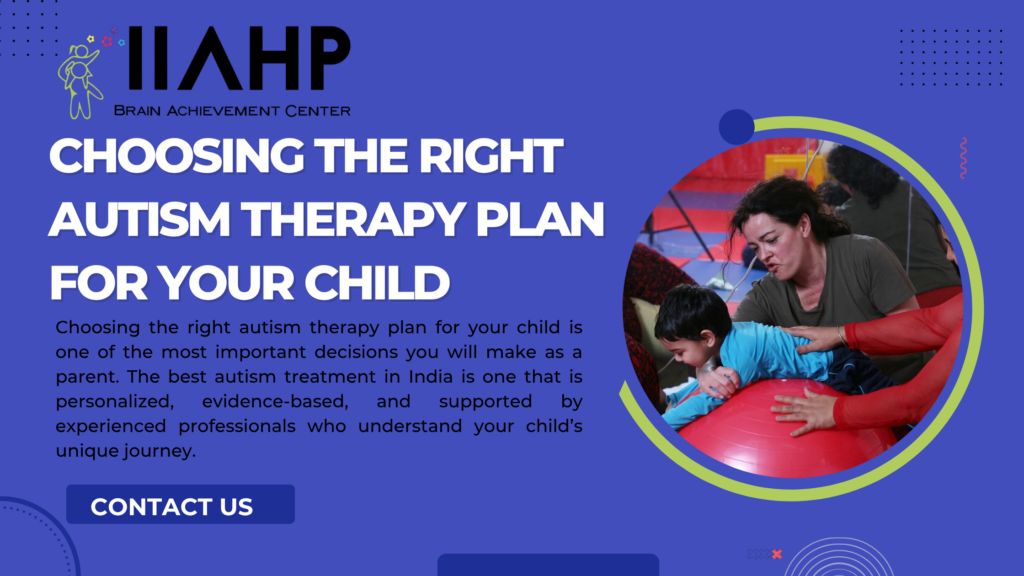
Choosing the right autism therapy plan for your child is one of the most important decisions you will make as a parent. The best autism treatment in India is one that is personalized, evidence-based, and supported by experienced professionals who understand your child’s unique journey.
With its comprehensive assessments, multidisciplinary therapies, and strong parent involvement, IIAHP offers a trusted path for families seeking meaningful and effective autism treatment.
If you are considering autism therapy for your child, taking guidance from experts at IIAHP can be a powerful first step toward unlocking your child’s full potential.